The OS is located on the 'Macintosh HD' volume. User data is located on the 'Macintosh HD - Data' volume.
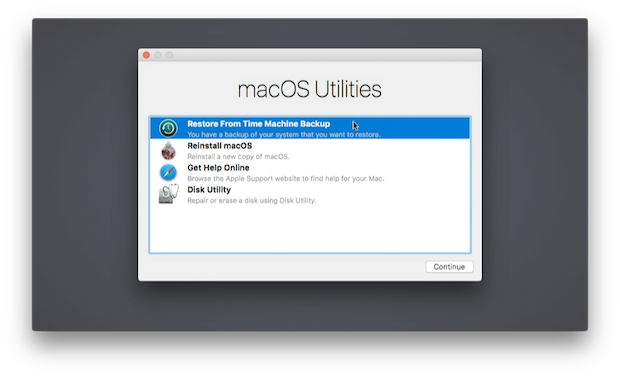
If you’re reinstalling on a Mac notebook computer, plug in the power adapter. Start up your computer in macOS Recovery: On a Mac with Apple silicon: Choose Apple menu Shut Down, press and hold the power button until you see “Loading startup options,” select Options, click Continue, then follow the onscreen instructions. Press and hold Command + Option + R.This allows you to reinstall the latest version of macOS that is compatible with your Mac computer from the internet. Press and hold Shift + Command + Option + R. This option allows you to reinstall the macOS that came with your Mac, or the closest version still available. Press and hold Command + R. This allows you to reinstall the version of macOS stored on your built-in recovery disk, including any updates that you installed. The correct way to reinstall macOS Catalina is to use your Mac’s Recovery Mode: Restart your Mac and then hold down ⌘ + R to activate Recovery Mode. In the first window, select Reinstall macOS Continue. Agree to the Terms & Conditions. Select the hard drive you’d like to reinstall mac OS Catalina to and click Install. The key to reinstall mac OS Big Sur, Catalina or Mojave without losing data is the backup, since no one can guarantee all data will be perfectly maintained after macOS reinstallation. However, if we unfortunately lost files after macOS reinstallation, Time Machine or Cisdem Data Recovery is helpful to recover them back. Question: Q: Format SSD drive and reinstall Mac OS Catalina I just bought a used iMac 2017 and didn't notice the SSD drive was partitioned. I can't quite understand the partitioning (see images, I have no idea what Mac HD I is, says it's mounted, but it's not visible).

How To Install Catalina On Macbook
:max_bytes(150000):strip_icc()/002-how-to-reinstall-macos-catalina-4796952-3e80a947613d451bbc3c5aae133728c5.jpg "Macos catalina reinstall music app")
If you erased the drive volume, then why not erase the whole physical drive instead? If the physical drive is not seen in Disk Utility, then click on 'View' and select 'Show all devices' option so that the physical drive appears in the left pane of Disk Utility. I don't know if this is an option when booted from the local Recovery Mode (Command + R), but it should be an option when booted to Internet Recovery Mode (Command + Option + R) or from a bootable macOS USB installer. For Catalina the drive must be erased as GUID partition and APFS (top option).
Macos Catalina Installed
Macos Catalina Install Stuck
Nov 23, 2019 4:26 PM